What it’s like to be “how constrained” and becoming a free thinker
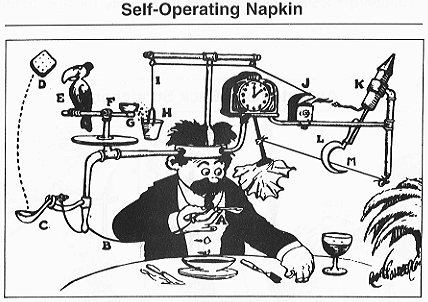
I think it’s most folks (engineers especially) default approach, when being introduced to a new system, product or idea, to immediately want to understand “how” something works. This blog is to specifically challenge that default, turn it around, and pose that we default to “why” something works. Why it has to exist, and why it is the way it is.

Continue reading “What it’s like to be “how constrained” and becoming a free thinker”

Announcing Reliability Nightmares (the SRE coloring book)

“We often think of movements as starting with a call to action. But movement research suggests that they actually start with emotion — a diffuse dissatisfaction with the status quo and a broad sense that the current institutions and power structures of the society will not address the problem. This brewing discontent turns into a movement when a voice arises that provides a positive vision and a path forward that’s within the power of the crowd.” — Harvard Business Review

The idea behind SIG-SRE started just like that — with emotion, and knowledge that the status quo would not produce the outcomes that Red Hat needs, in the timeframe it needs them, to become competitive in the managed services business.

In addition to the fun video we created for the kickoff, the team has put together a coloring book to highlight how SREs think and how the practice of SRE impacts service using a Kitchen Nightmares restaurant analogy.

Continue reading “Announcing Reliability Nightmares (the SRE coloring book)”

Lessons learned while bootstrapping new $things

During my career at Red Hat, I’ve had the great pleasure of being a go-to person to bootstrap $things. After a good amount of repetitions, I’ve arrived at a bit of a blueprint on how to do it. Each go at it becoming more and more refined and incorporating lessons learned as each $thing presents its own nuances.

As an engineer exploring ways to bootstrap $things, Simon Sinek’s book Start with Why deeply resonated with me. I began looking for frameworks that let me capture “why” in a way that has unyielding precision, and found the Patrick Lencioni’s Six Critical Questions section in his book The Advantage.

I’ve now used this format several times and am continually impressed by how durable it is. If you can capture the essence of the new $thing in this format, you can look back on it even years in the future, and your intent remains unambiguous.

Continue reading “Lessons learned while bootstrapping new $things”